What Is a Magnetic Drive Pump? An Introduction to Chemical Industry Applications and Selection
The chemical industry involves many types of liquid transfer needs, including chemical raw materials, chemical solutions, acid/alkali liquids, solvents, and other special fluids.
Because different fluids have different chemical properties, temperatures, viscosities, and concentrations, a pump's structure, materials, and specifications need to be evaluated according to actual application conditions.
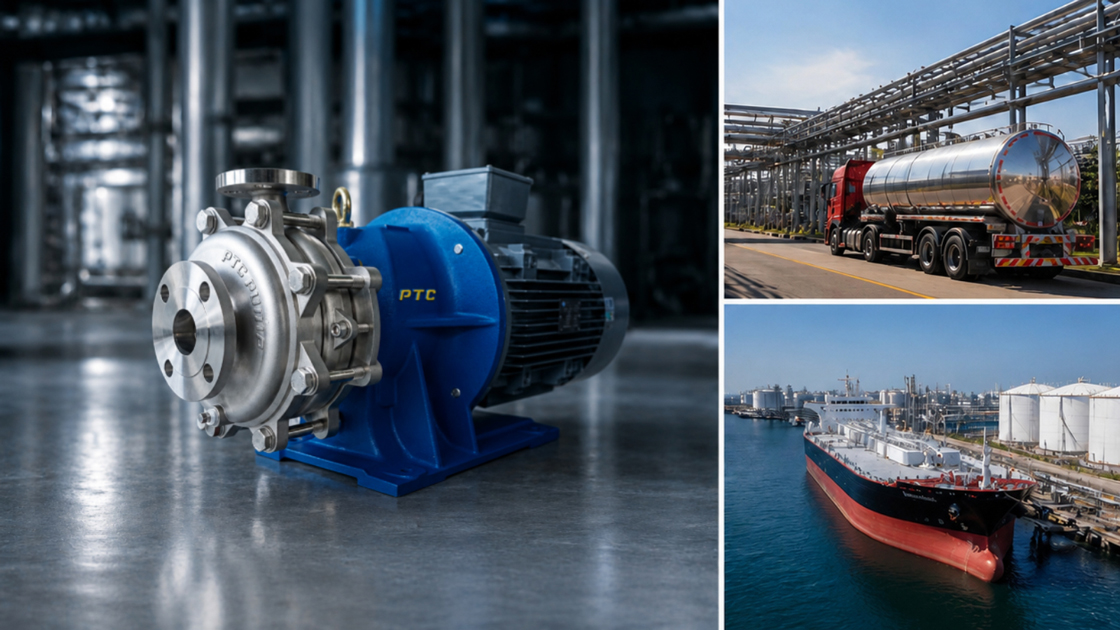
A magnetic drive pump is a pump that uses magnetic force to transmit power from the motor to the impeller. It adopts a sealless design and can be applied to certain fluid-transfer scenarios that are more sensitive to leakage risk.
This article introduces the operating principle of magnetic drive pumps, their applications in the chemical industry, pump selection, and material selection, to help readers understand how magnetic drive pumps are used in chemical liquid transfer.
1. How Does a Magnetic Drive Pump Work?
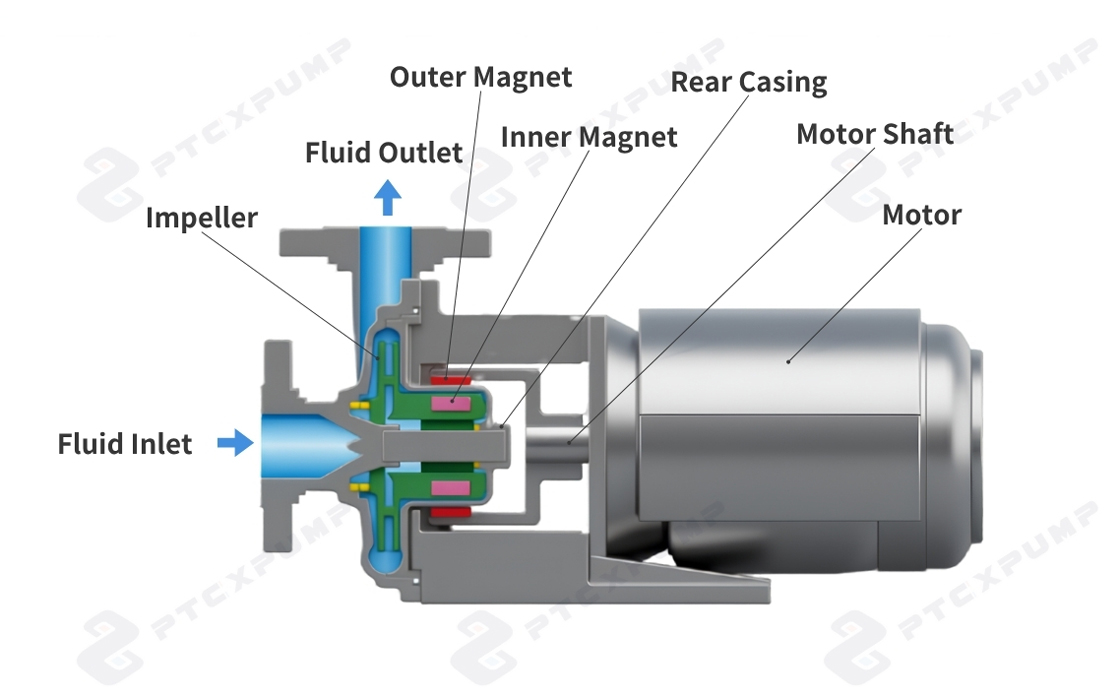
A magnetic drive pump uses magnetic force to transmit power from the motor to the impeller.
A typical magnetic drive pump mainly consists of a motor, a magnetic coupling structure, an impeller, and a pump casing. The rotational power generated by the motor is transmitted to the impeller through the magnetic coupling, causing the impeller to rotate and generate the pressure needed for fluid transfer.
Compared with traditional pumps that use mechanical shaft seals, a magnetic drive pump adopts a sealless design and does not require power to be transmitted directly through a rotating shaft passing through the pump casing.
This structure can reduce the leakage risk associated with traditional mechanical shaft seals, and is therefore of interest in certain chemical liquid applications and other applications requiring fluid containment.
However, the actual suitability of a magnetic drive pump still needs to be evaluated based on the fluid being transferred, the pump materials, and the operating conditions.
2. Why Can Magnetic Drive Pumps Be Used in the Chemical Industry?
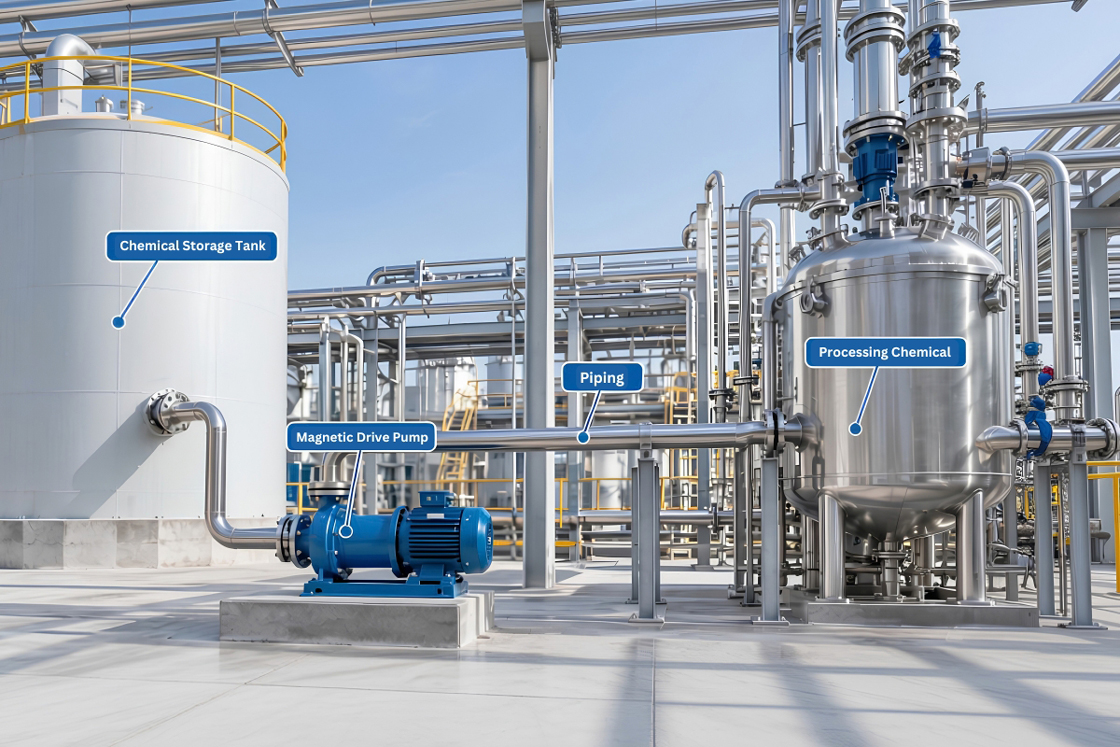
Fluids in the chemical industry are quite diverse, including acids, alkalis, chemical solutions, solvents, raw materials, and intermediates.
Some chemical liquids may be corrosive or have other special properties, so when selecting a pump, in addition to transfer capacity, the pump structure and wetted materials also need to be considered.
The sealless structure of a magnetic drive pump can reduce the leakage risk associated with mechanical shaft seals, making it a pump option for certain chemical fluid transfer applications.
However, not all chemical liquids can use the same pump configuration. The actual application still needs to confirm whether the pump material and structure are suitable based on the chemical liquid's composition, concentration, temperature, and other operating conditions.
3. What Factors Should Be Considered When Selecting a Pump for Chemical Liquids?
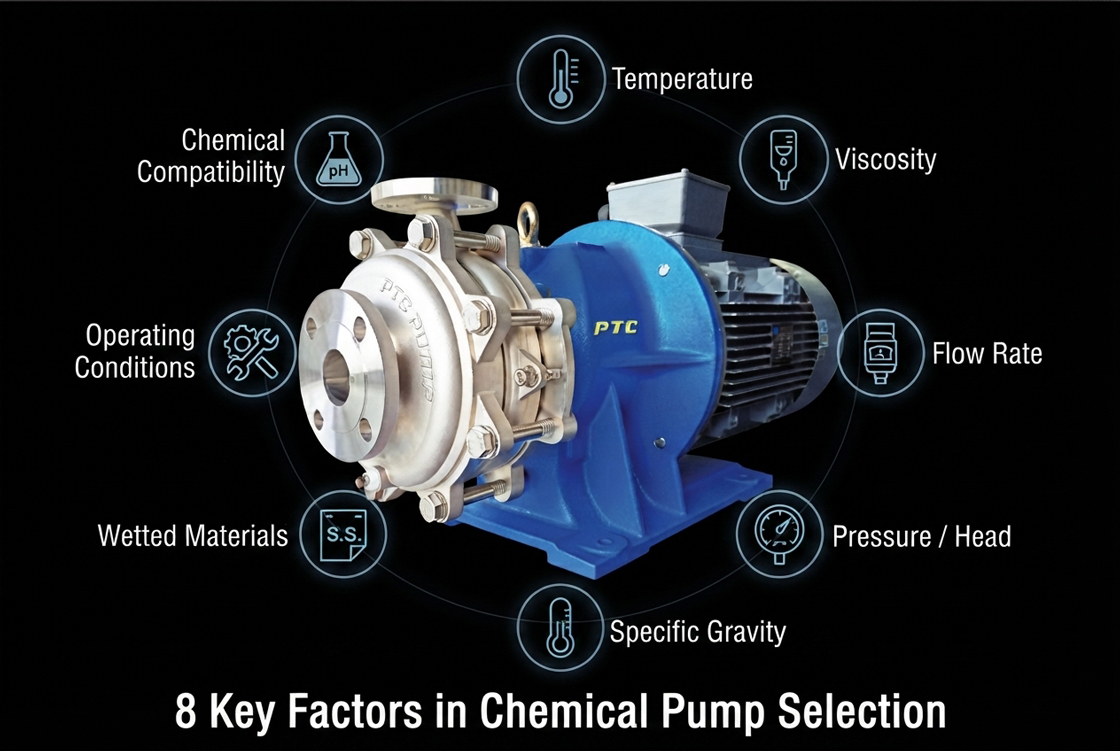
Chemical Compatibility
The compatibility between the chemical liquid and the pump's wetted materials is an important consideration in chemical pump selection.
Different chemical fluids may affect metals, plastics, or other materials to varying degrees, so material suitability needs to be confirmed based on the actual chemical composition and concentration.
Temperature
Liquid temperature can affect the material's tolerance conditions and the pump's operating status.
Therefore, actual operating temperature needs to be factored into the evaluation when selecting a chemical pump.
Viscosity
Liquid viscosity affects fluid flow characteristics and pump performance.
For liquids of different viscosities, it is necessary to confirm whether the pump can meet the required flow rate and pressure based on actual application conditions.
Flow Rate
Flow rate represents the amount of liquid that needs to be transferred per unit time, and is an important condition in pump specification evaluation.
Different applications may have different flow rate requirements, so an appropriate pump specification needs to be selected based on actual system conditions.
Pressure and Head
The pump needs to overcome the pressure difference and pipeline resistance in the system, so conditions such as transfer distance, piping configuration, and system pressure can all affect pump selection.
Specific Gravity
The specific gravity of different chemical liquids may vary, and it is also one of the factors to consider when evaluating pump operating conditions.
Wetted Materials
The materials in contact with the liquid need to be evaluated according to the fluid being transferred.
Common materials may include various types of metals, ceramics, fluoropolymers, and other engineering materials.
Material selection cannot simply be judged by "which material is best" — it needs to be confirmed according to actual chemical composition and operating conditions.
Actual Operating Conditions
In addition to the fluid itself, the actual usage environment also needs to be considered, for example:
- Operating temperature
- Flow rate requirements
- Pressure conditions
- Start-up and running conditions
- Piping system
- Liquid characteristics
Therefore, chemical pump selection usually requires a comprehensive evaluation of multiple conditions.
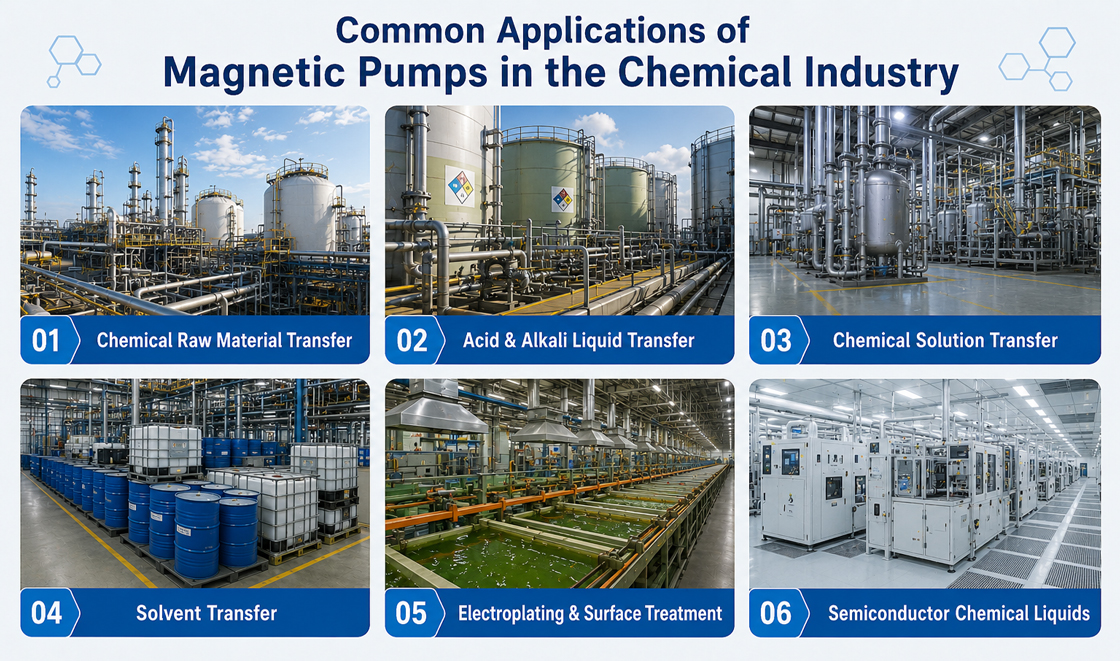
4. Common Applications of Magnetic Drive Pumps
Chemical Raw Material Transfer
In the chemical industry, raw materials may need to be transferred between different storage tanks, equipment, or systems.
The pump needs to be selected according to the raw material's physical and chemical properties.
Acid/Alkali Liquid Transfer
Acidic and alkaline liquids may affect pump materials to different degrees, so material compatibility is an important consideration for this type of application.
Magnetic drive pumps can be evaluated for suitability based on actual fluid properties and pump material configuration.
Chemical Solution Transfer
Various chemical solutions may have different concentrations, temperatures, and viscosities, so pump specifications and wetted materials need to be evaluated according to actual conditions.
Solvent Transfer
Some chemical industry processes involve the transfer of organic solvents or other special liquids.
In addition to flow rate and pressure, this type of application also needs to confirm the compatibility between the pump material and the liquid.
Electroplating and Surface Treatment
Electroplating and surface treatment applications may involve acids, alkalis, or other chemical solutions.
The pump's material selection and chemical resistance need to be evaluated according to the actual liquid used.
Semiconductor-Related Chemical Liquid Transfer
The semiconductor industry involves the transfer and supply of various chemical liquids, which may have different requirements for equipment materials and fluid control.
The pump needs to be evaluated according to the actual liquid properties, purity requirements, and operating conditions.
5. What Is the Difference Between Magnetic Drive Pumps and Traditional Sealed Pumps?
| Item | Magnetic Drive Pump | Traditional Sealed Pump |
|---|---|---|
| Power Transmission | Transmitted via magnetic force | Transmitted via rotating shaft |
| Seal Structure | Sealless design | Uses mechanical shaft seal |
| Leakage Consideration | Reduced leakage risk related to shaft seals | Shaft seal condition must be monitored |
| Material Selection | Selected based on liquid properties | Selected based on liquid properties |
| Suitability | Evaluated based on usage conditions | Evaluated based on usage conditions |
| Maintenance Considerations | No traditional shaft seal; different maintenance approach | Shaft seal and related parts must be monitored |
These two pump structures each have different design characteristics. The actual choice should still be evaluated based on fluid properties, system conditions, and equipment requirements, rather than simply judging which structure is "better."
6. How Does Material Selection Affect Chemical Pump Applications?
Stainless Steel | SUS316L
Stainless steel has good mechanical strength and corrosion resistance, and can be evaluated for use according to different materials and application conditions.
Engineering Plastic | GFRPP
Some specialized chemical environments may require engineering plastic materials with higher corrosion resistance. Their suitability should be evaluated based on the fluid being transported and the actual operating conditions.
Fluoroplastic / Fluoropolymer | CFR-ETFE
Some fluoropolymers have good chemical resistance and can be evaluated for application based on actual fluid properties.
Special Alloys
For high-temperature, high-pressure, or highly corrosive fluids, special alloys with excellent corrosion and chemical resistance can be selected to improve the pump's reliability and durability.
What Should Be Noted in Material Selection?
Material suitability cannot be judged simply by material name.
Actual selection requires comprehensive consideration of:
- Chemical composition
- Liquid concentration
- Operating temperature
- Fluid characteristics
- Contact duration
- System operating conditions
Therefore, in chemical pump selection, material compatibility and actual operating conditions must be evaluated together.
7. What Should Be Noted When Using Magnetic Drive Pumps in the Chemical Industry?
Whether Flow Rate Meets Requirements
Confirm whether the pump's flow rate meets actual system requirements.
Pressure and Head
Confirm whether the pump can meet the pressure and head conditions required by the system.
Operating Temperature
Actual operating temperature must fall within the range applicable to the pump and related materials.
Liquid Viscosity
Liquid viscosity may affect pump performance, so it must be factored into the evaluation.
Wetted Materials
Confirm the compatibility between the pump material and the liquid being transferred.
Actual Operating Environment
In addition to the liquid itself, actual piping, operating conditions, and equipment environment must also be considered.
Therefore, when selecting a chemical magnetic drive pump, judgments should not be based solely on the liquid's name or a single parameter — fluid properties and overall operating conditions should be evaluated together.
8. Frequently Asked Questions (FAQ)
Can magnetic drive pumps transfer corrosive chemical liquids?
Suitability needs to be evaluated based on the actual chemical liquid's composition, concentration, temperature, and the pump's wetted materials. Different chemical liquids affect materials differently, so a judgment cannot be made simply based on the category of "corrosive liquid."
What factors need to be considered when selecting a chemical magnetic drive pump?
Generally, the liquid's chemical composition, concentration, temperature, viscosity, specific gravity, flow rate, pressure, material compatibility, and actual operating conditions need to be considered.
Are magnetic drive pumps suitable for all chemical liquids?
Not necessarily. The suitability of a magnetic drive pump needs to be evaluated based on actual liquid properties, wetted materials, pump specifications, and operating conditions.
Do liquid viscosity and specific gravity affect magnetic drive pump performance?
Yes. A fluid's viscosity and specific gravity directly affect flow characteristics and pump efficiency. Selection must be evaluated based on actual values and cannot rely on general standards.
Are magnetic drive pumps suitable for transferring chemical liquids containing solid particles?
Special caution is needed. Because the internal structure of a magnetic drive pump is precise, if the liquid contains impurities or particles, it may cause wear or jamming of internal components during operation.
What environmental conditions should be noted when operating a magnetic drive pump on site?
Attention should be paid to the actual piping configuration, system pressure difference, start-up and running conditions, and whether the operating temperature is within the material's allowable range.
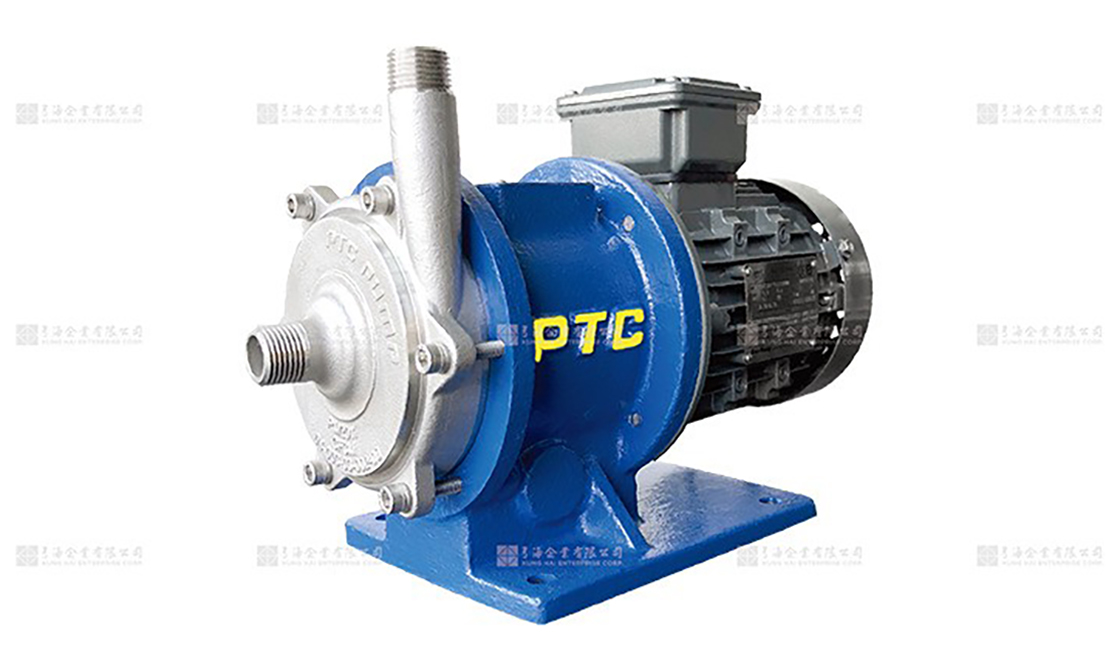
9. PTCXPUMP Magnetic Drive Pump Products
PTCXPUMP focuses on magnetic drive pumps and related fluid transfer applications; products can be evaluated according to different fluid properties and operating conditions.
For chemical industry applications, pump selection can be considered from factors such as flow rate, pressure, temperature, liquid properties, and material compatibility.
The pump specifications and material configuration required for different applications may vary, so the actual product selection should be confirmed based on specific fluid and operating conditions.
10. Conclusion
Fluids and operating conditions in the chemical industry are highly diverse, and pump selection needs to consider fluid properties, material compatibility, flow rate, pressure, temperature, and the actual operating environment together.
Magnetic drive pumps use magnetic coupling and a sealless structure, making them a pump option for certain chemical liquid transfer applications. In actual use, it is still necessary to evaluate the appropriate pump structure and material configuration based on specific fluid and system conditions.
For the chemical industry, the right pump choice does not depend simply on the pump type — fluid properties and overall operating conditions must be comprehensively considered.
Further Reading
- Chemical industry applications
- Semiconductor industry applications
- Magnetic drive pump technical articles
- Chemical liquid transfer related articles
Disclaimer
The content of this article is for technical reference and knowledge sharing only. Actual pump selection, materials, and usage conditions should be evaluated and confirmed by professionals based on fluid properties, temperature, pressure, flow rate, and on-site system conditions.
For specific fluid transfer needs, it is recommended to consult a professional technical team to obtain suitable product and application recommendations. Contact Us